Curatorial Text
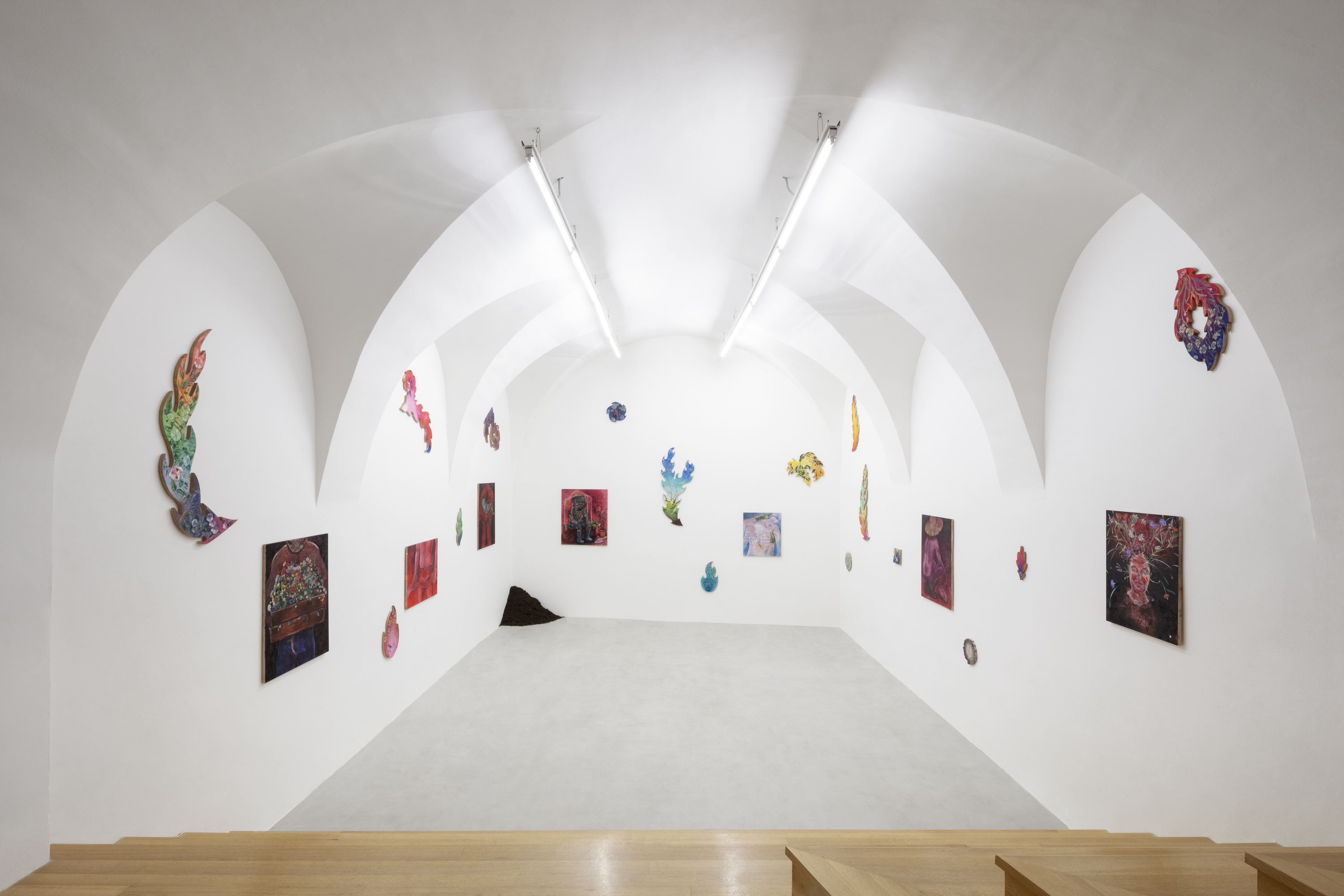
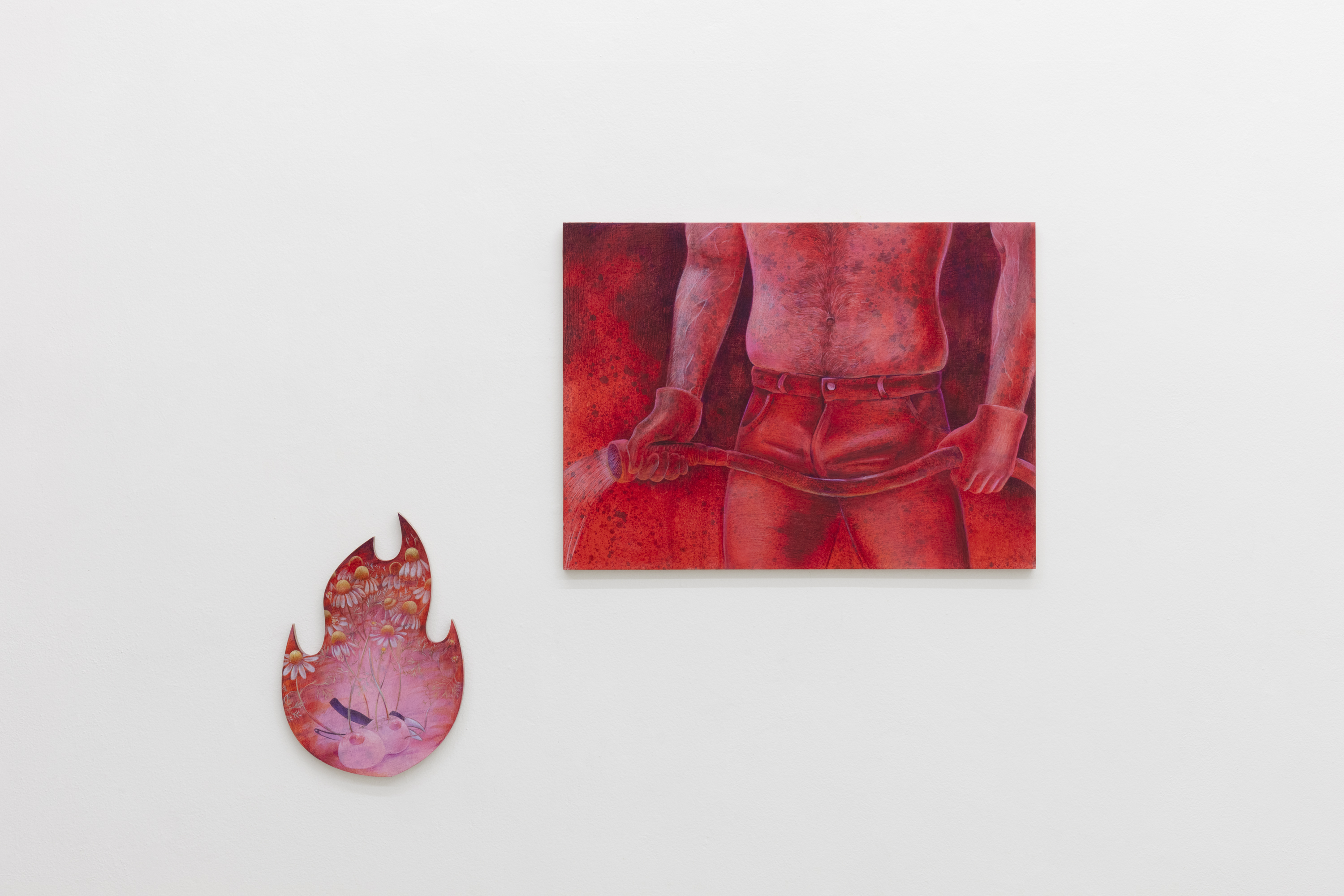
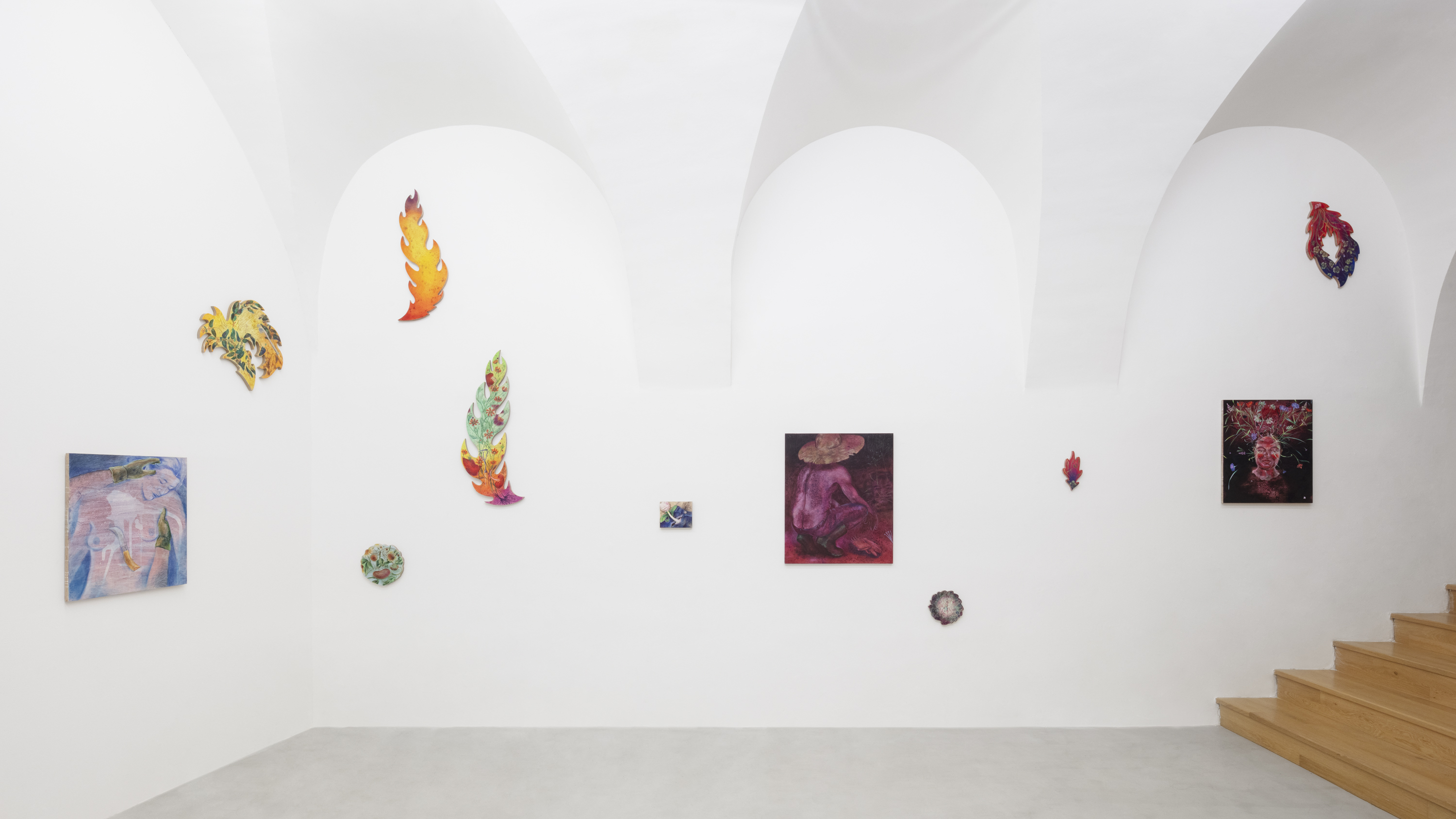
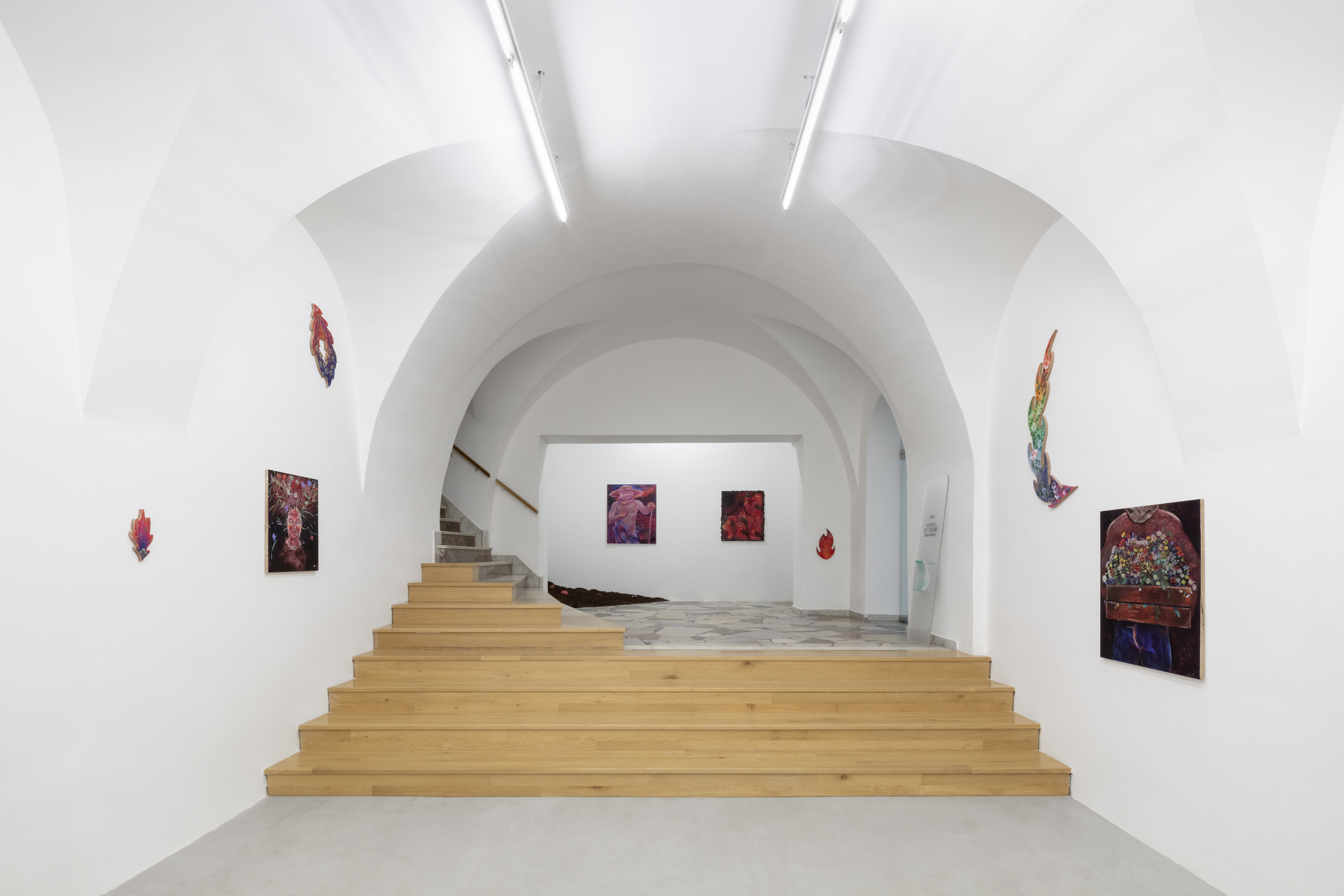
Lucie Lienerová, creating under the pseudonym Lištica, is a recent graduate of the Painting Studio 3 at the Faculty of Fine Arts in Brno. Her paintings often connect citations from art history with her own experiences – competitive swimming, horse riding, or personal experiences with loved ones. In the Weed Spreader exhibition, we observe the dynamics of a relationship between two people, reflecting the inner intuition of the observer as well as the effort for rational categorization and understanding of revealed symbols. The theme of transformation appears important, with its dual nature – both caring and violent – as well as the theme of ostracization, represented by the motif of weeds.
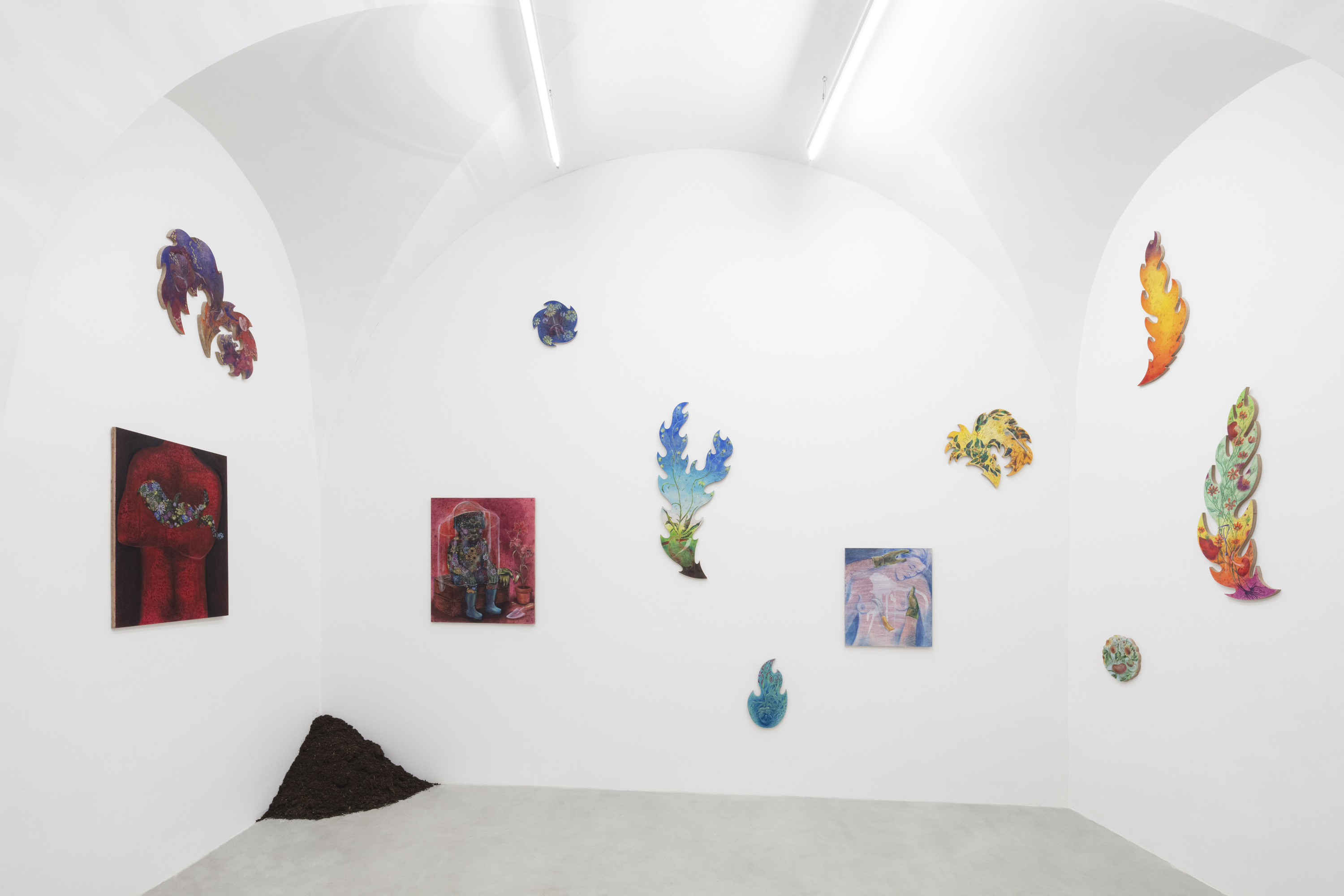
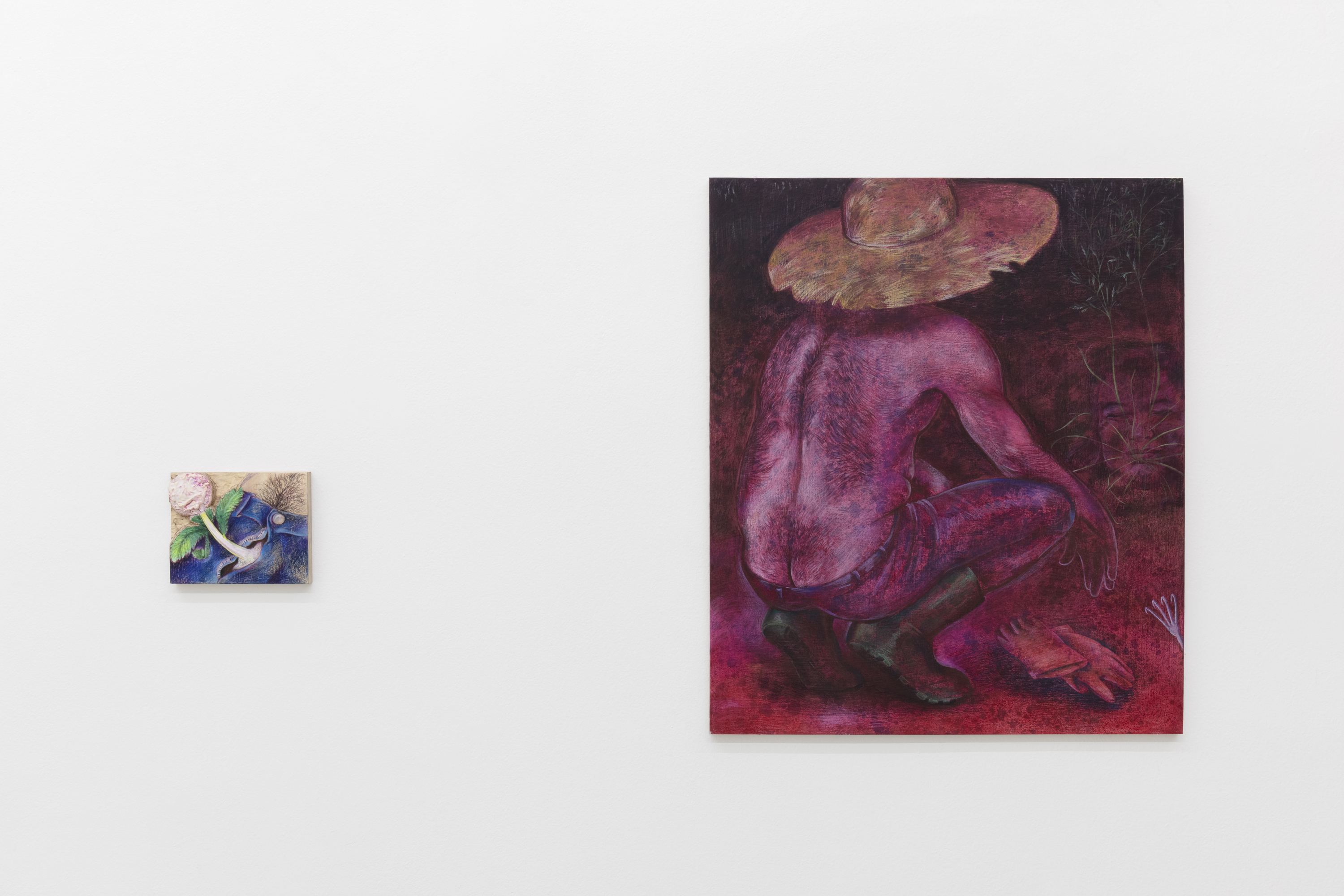
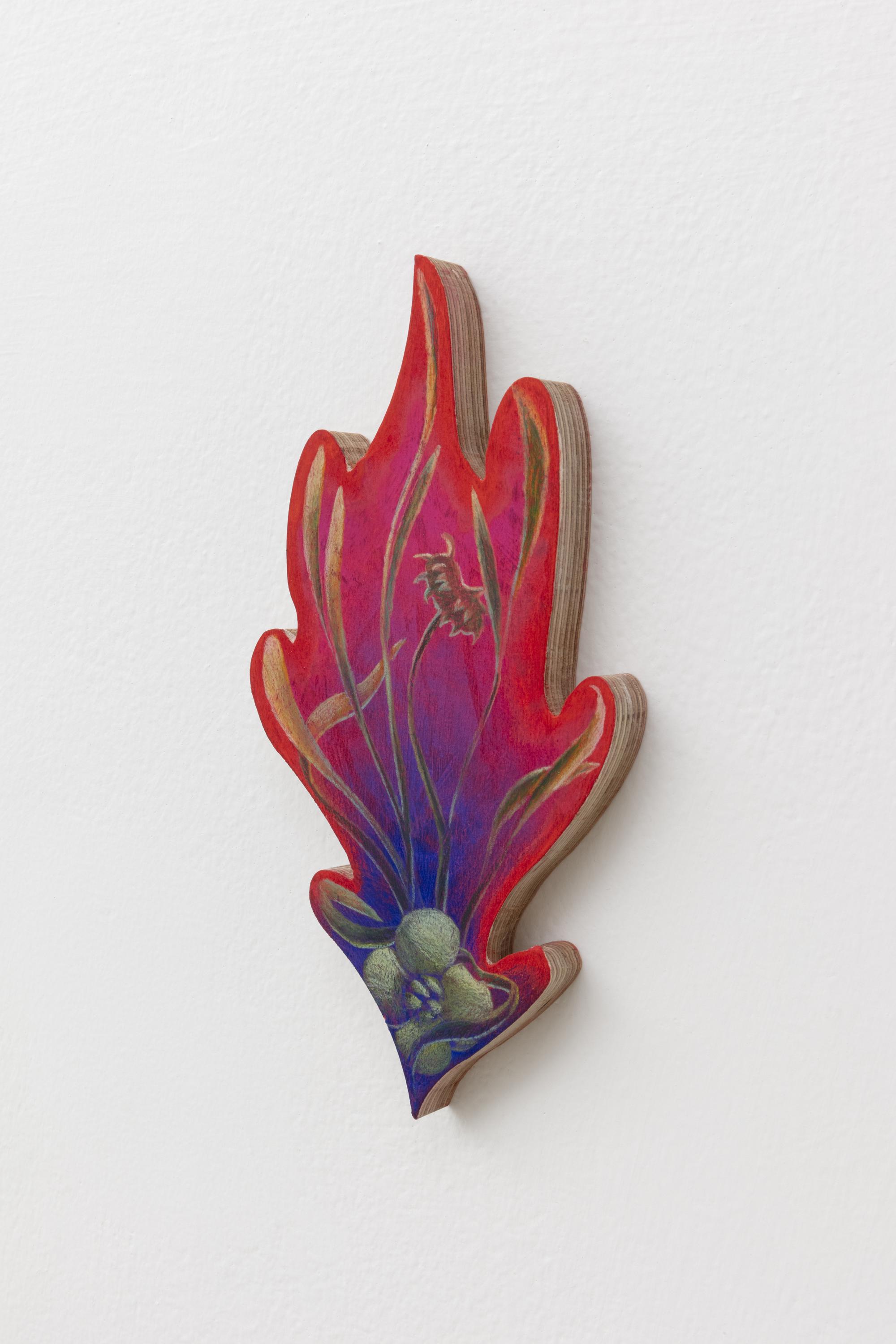
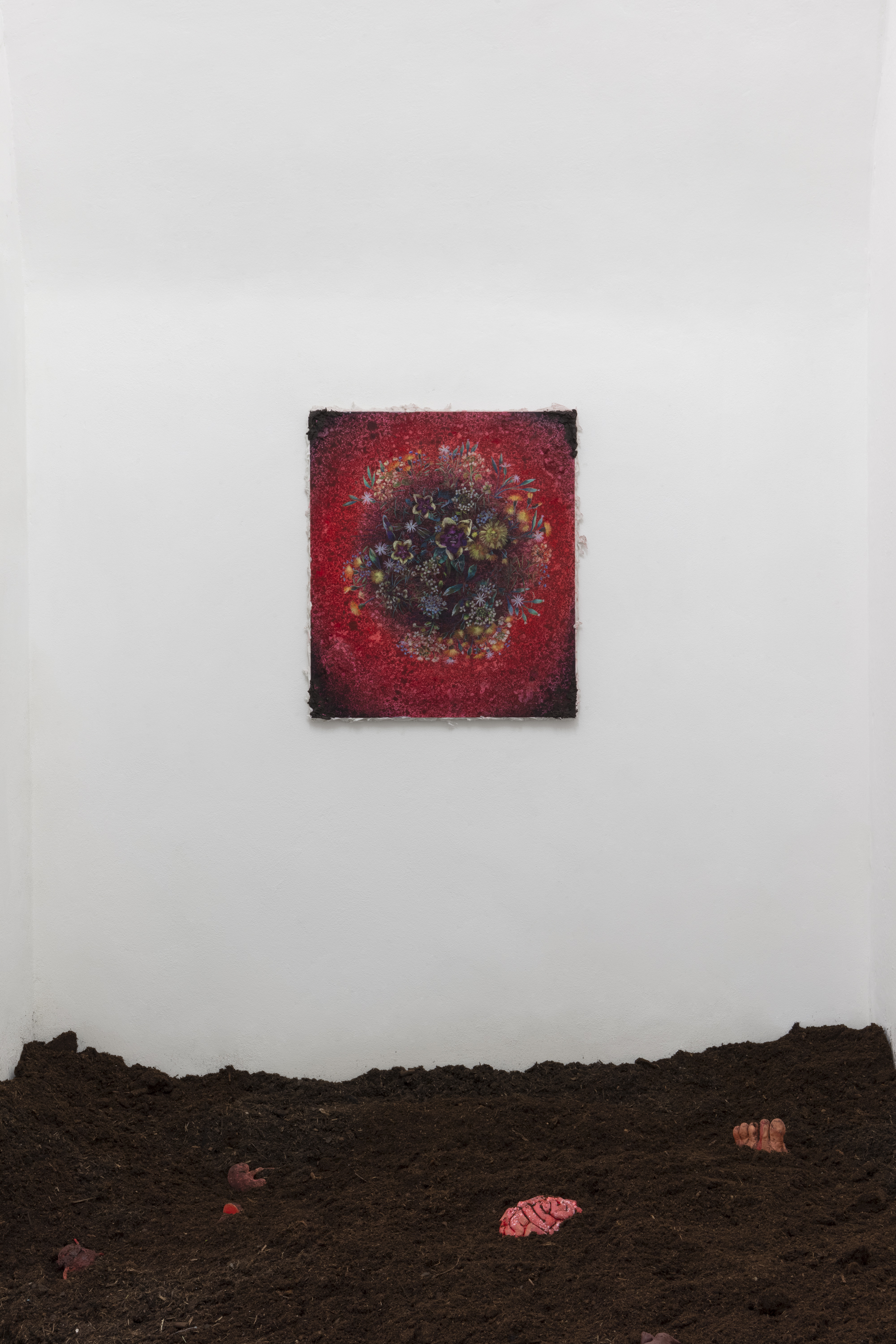
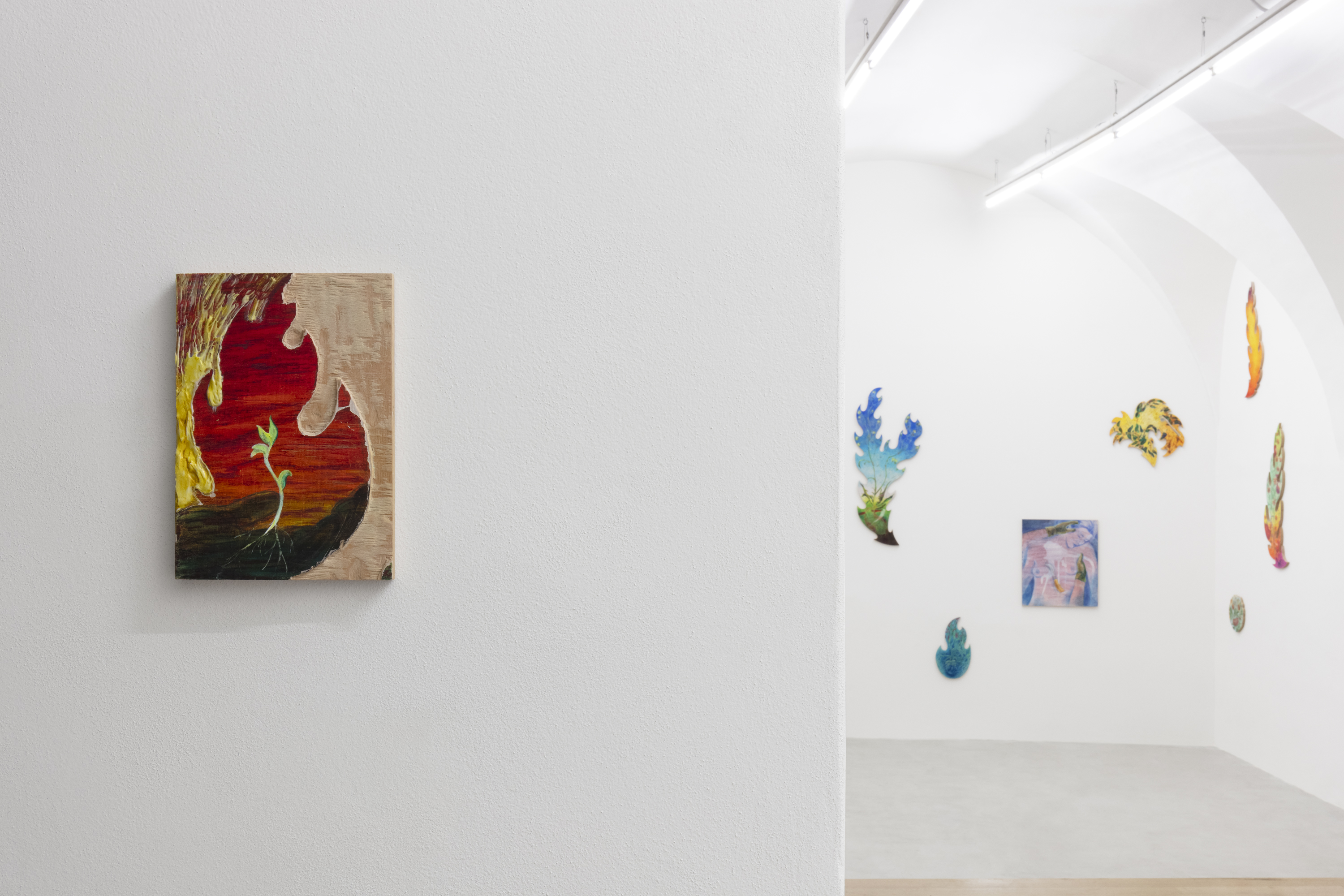
The author's interest in plants considered harmful, useless, parasitic, or even aggressive only seemingly concerns their attractive and diverse morphology. The carefully painted atlas of weeds itself is more a fictional than a realistic depiction of actual plants. Much more important seems to be the understanding of their role, status, and character, which the author metaphorically transfers to people. The weed motif thus represents all the excluded who can be beneficial in their micro-constellations despite the uselessness generally attributed to them, their overly complicated nature, or other difficulties. Although the paintings of plants themselves stylize weeds into beautiful, lush blooming bouquets in places, the entire series of paintings does not bring a clear, quick, or schematically positive solution to a precarious situation. The weed-human remains a weed in plant form, and this transformation is redeemed by pain and even violence.
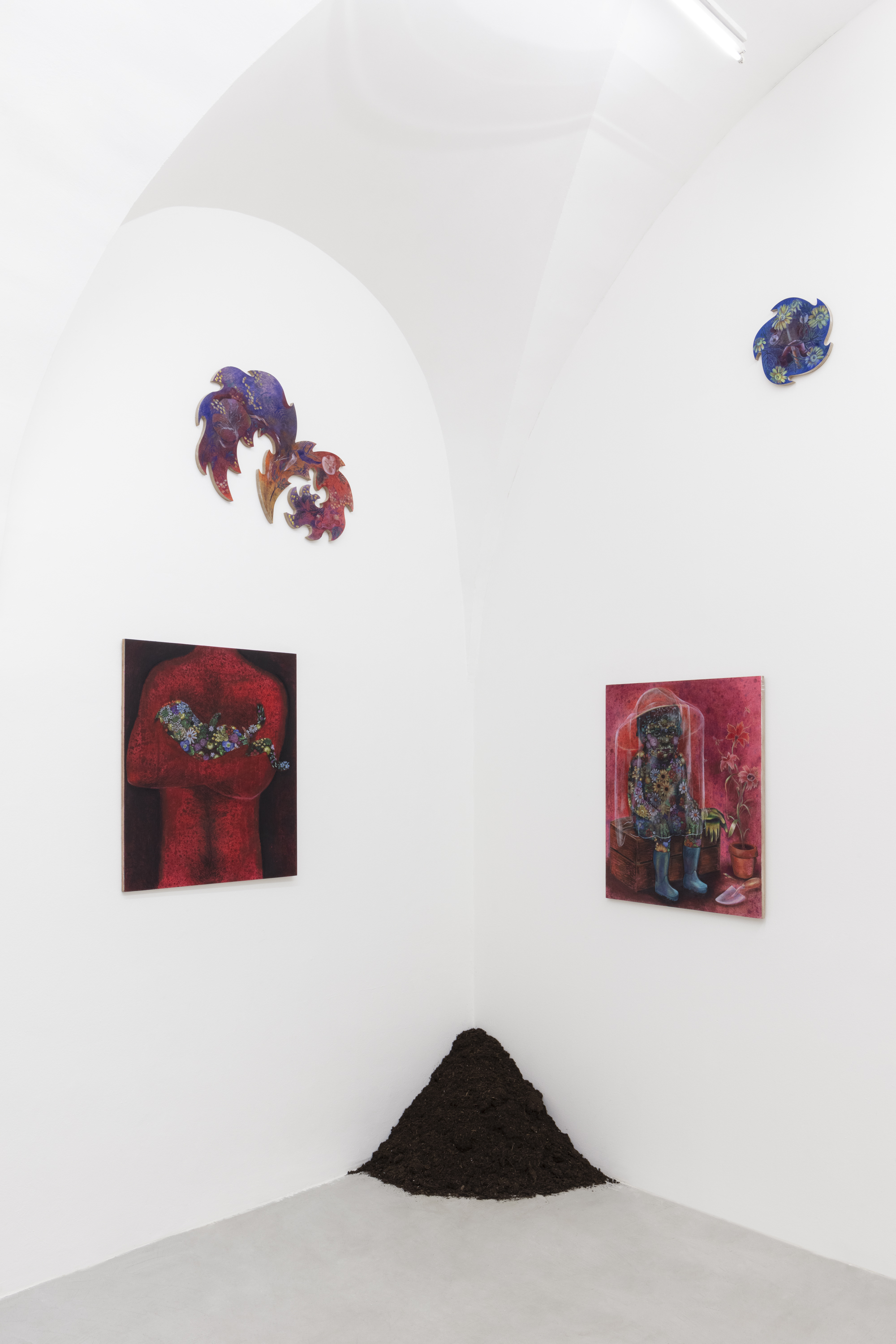
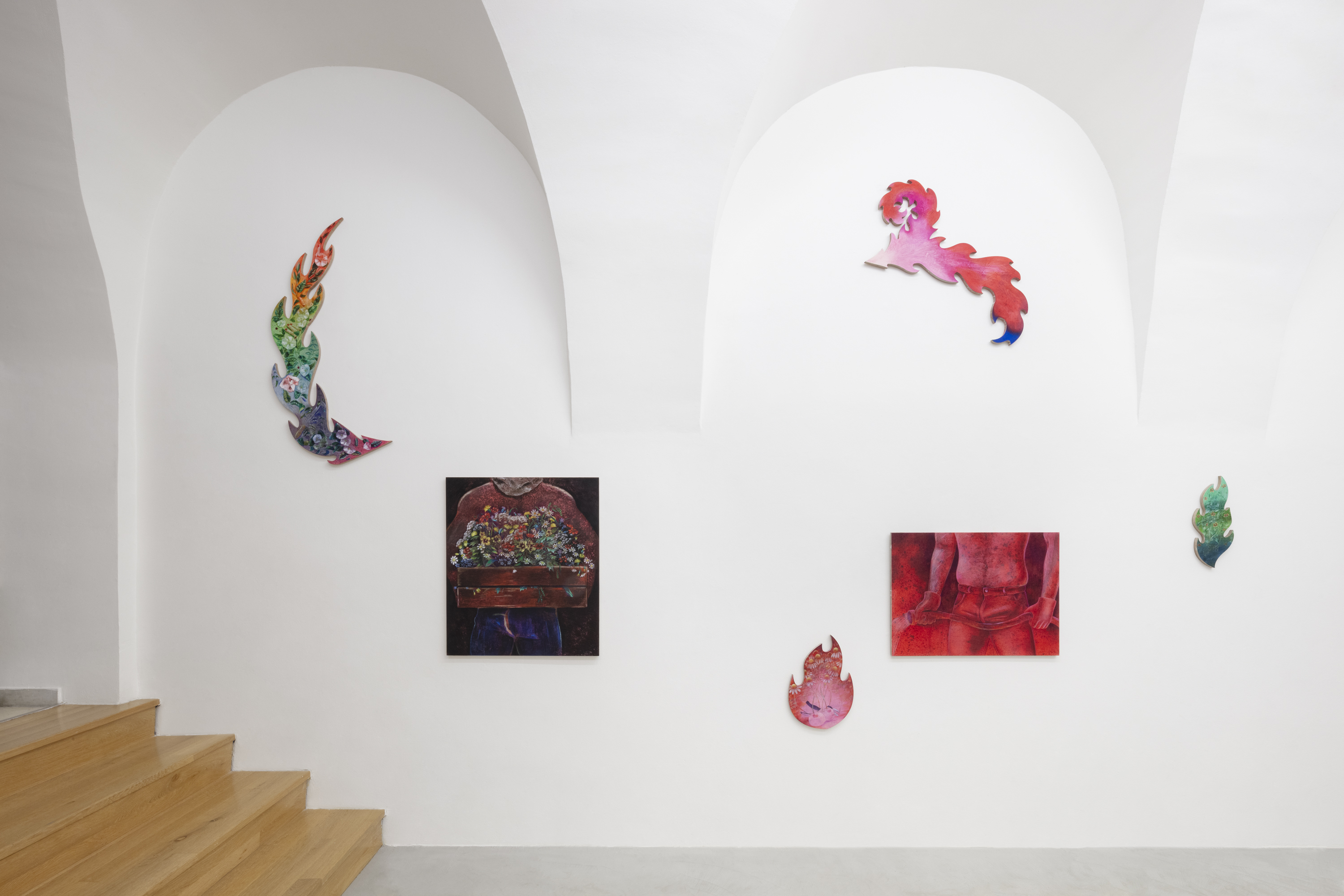
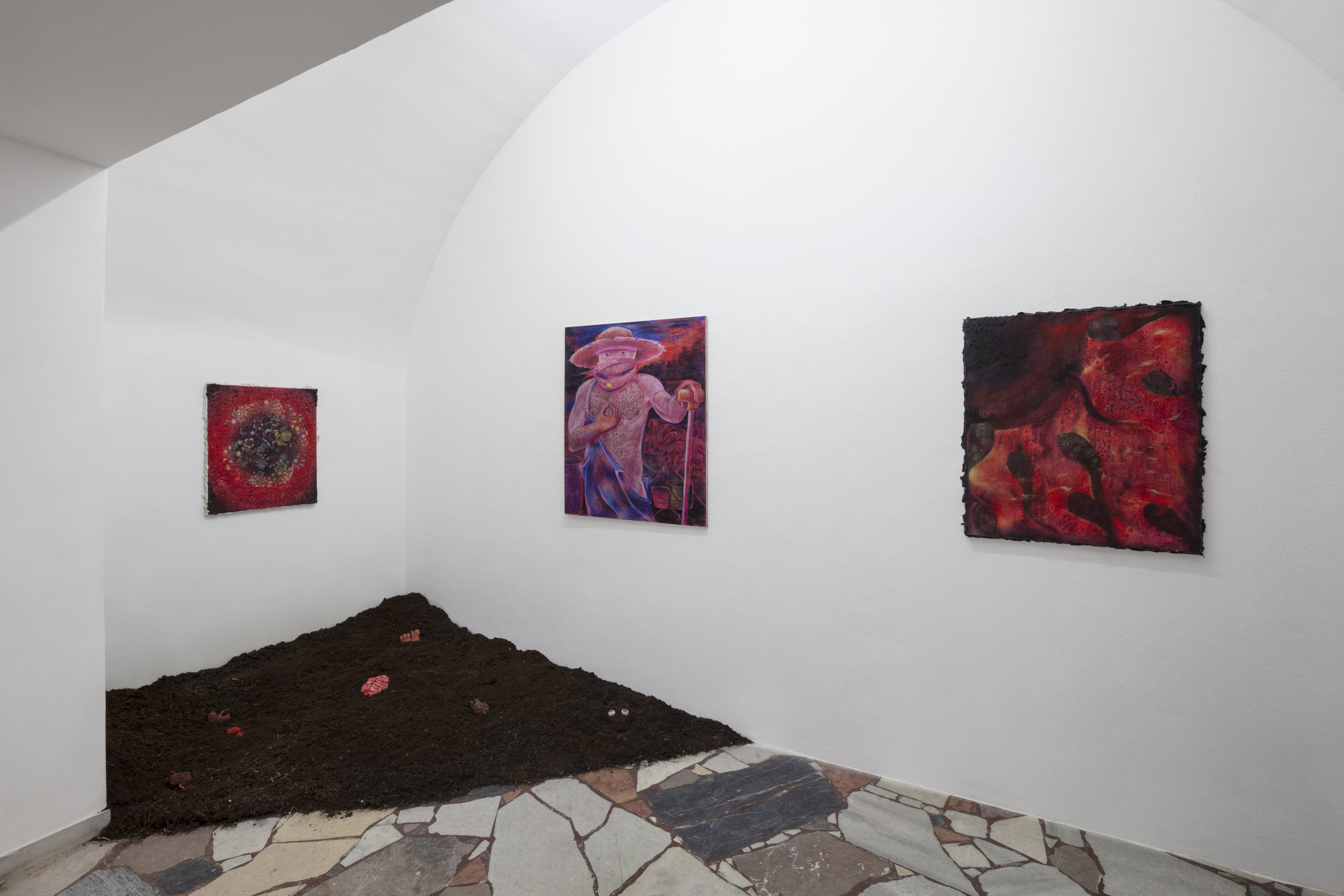
The central figure and mover of the plot in the painting series is the character of the Weed Spreader – an (anti)gardener who comes into contact with the female character Iva. From the narrative fragments of the paintings, it can be deduced that Iva has become one of his "victims." Her organs and body parts are placed in the soil, and thanks to the Weed Spreader's care, they germinate, grow, and change character. For the (anti)gardener, instinctiveness and the libidinal character of corporeality are dominant in this part of the story. His body, but also the gaze upon it, is desiring, yet at the same time, there is something repulsive about it. This thin line between attractiveness and rejection concentrates within itself mischief, irony, but perhaps also confusion.
An aspect related to this ambiguity is also a kind of "revenge" reversal of the "male gaze" principle, which the author performs from the position of an observer of the story. She subjects the Weed Spreader's body to sarcastic scrutiny, emphasizing the contrasts between a real male body and its ideal as known throughout art history. By doing so, she overturns or at least equalizes positions of power. And thanks to this reverse gaze, Iva does not remain in the passive role of a victim but literally blooms in her new (perhaps more reconciled) weedy form.
In contemporary literature, we could find several works that more or less fittingly relate to the themes and motifs of the Weed Spreader and describe the experience of violence and (posthumanist) desire for transformation by other means. Descriptions of strong physical attraction as well as aggressive behavior related to social exclusion can be found in Édouard Louis's History of Violence.
The main storyline here involves the traumatic experience of sexual assault. Han Kang describes an inner desire to transform into a tree in the book The Vegetarian. The motif of flowers and plants here also acts as a trigger for physical arousal, which plays into the hands of manipulative sexual contact leading to the gradual "madness" of the main character. The world of Jonáš Zbořil undergoes the most explicit transformation in the lyrical prose Flora. An indefinite shape, a plant, an animal, and a piece of cable transmitting a signal prosper at the expense of their main caregiver in the spirit of the law of conservation of energy. And where else but in an excluded zone, a former gardening colony. The garden, the plant world, or wild nature have been a grateful projection surface for anchoring various stories and meanings since time immemorial. At the exhibition, we follow various possible content shifts led by the author's intuition over time, which is why it may not be easy (and perhaps not even necessary) to orient oneself in their evolving symbolism.
The origin of the human bodies that the Weed Spreader plants is unknown. He may be a murderer, perhaps a collector or a savior, but he is certainly also a caregiving figure. He raises a child who, although having human outlines, likely has bodily tissue that is more plant-like. The paintings in this series do not have the ambition to close the plot or reach a punchline. They observe, immerse, overturn, doubt, try, and above all refuse to stagnate, ossify, or schematize.
Ivana Hrončeková
Photography by Eva Rybářová